The Broad Strokes

I've been building and designing products and services for a long time. I've encapsulated some of the high-level themes and types of projects that have consistently run through my career in an effort to illustrate my thinking process, how I overcome obstacles, the breadth of my expertise, and how I show up for projects and teams.
- I've worked across the spectrum of digital experiences: Small business websites, mobile games and apps, search engines, e-commerce, data dashboards, review sites, internal tools, emails, and Facebook apps to name a few.
- I've incorporated AI into my process responsibly by learning, exploring, experimenting, and most importantly vetting the content I produce. I have a system of checks and balances and keep tabs on the tasks where AI can save me time and avoid AI when I feel the pull of the rabbit hole.
- I've been a tireless proponent of good discovery work, performing hundreds of interviews, user tests, heuristics analyses, and surveys over the course of my career.
- Throughout my career, I have focused on systems and connective tissue. I've advocated for and spun up projects to address unmet needs in data and discovery, team dynamics, internal processes, and in the products themselves.
- My skills extend beyond designing products: I've created and facilitated workshops, built analytics dashboards, managed content, created brand guidelines, worked on design systems, created icons and graphics, written countless lines of HTML & CSS, instituted activities for fostering creativity and team morale, and automated systems among other endeavors.
-
A few project callouts:
- I created service blueprints with one of our Product Managers to identify issues in our customer service flow. We found a taxonomic misalignment where customer service reps were forced to mislabel issues from a list that didn’t reflect complaints. Aligning the taxonomy reduced time spent on manual data analysis and allowed for clearer identification of user pain points (2024).
- I redesigned an end to end login flow using data from customer service logs, interviews, and analytics resulting in an increase in review submissions of more than 12% and the average number of customer service cases per month dropping from 93 to 38 (2019).
- I worked closely with a team of content moderators to redesign their content moderation interface and flow, increasing the number of reviews they could moderate by 50%, from 60 to 90 reviews per hour (2016).
- I designed the user interface for a musical mobile app that was runner up for Apple's app of the year - right behind Instagram (2011).
The Problem
As a remote design team where individual contributors were dispersed across product teams, there weren't many opportunities for the team to share creative ideas, establish psychological safety, and develop the kind of camaraderie that facilitates innovation and collaboration. Designers embedded in different teams didn't have enough visibility into overlapping and/or duplicative work and there were a number of managerial tasks that were manual and inefficient.
My Approach
When I took over running our design team meetings, I took it as an opportunity to work towards creating a more welcoming and fun environment. Working in video games for years had set the bar high for camaraderie, creativity and delight in a work setting. At the very least, I wanted designers to feel comfortable sharing ideas and getting to know one another.
- I started with basic Slack fixes:
- A new water cooler channel for designers to share non-work news, inspiring design and art, and have some of the conversations they might in a physical office
- An automated Friday Vibes message for designers to share how they're feeling with emojis (silly but fun)
- Automated reminders and sign ups for design review meetings (which triggered the creation of a Confluence page)
- I led by doing: sharing my own art projects and other content I thought the team might be interested in.
- For my direct reports, I created shared Slack canvases for us to track progress on goals, keep links to relevant artifacts, go over current work, and share notes.
 I lobbied leadership to fund the purchase of a variety of physical art supplies, assembled the packages, and sent them to our team members located across the country to encourage them to get creative off screen at home and in our happy hours.
- I kicked off a creative-time happy hour where we explored different creative and social activities:
- Pipe cleaner Pictionary
- Using AI to create funny creative prompts for activities like drawing with your left hand, or creating a scene out of geometric stickers
- Collecting funny facts about team members lives/childhoods/creative work and using them for guessing games
Reflections & Takeaways
While overall the feedback about the happy hours was positive, some team members pushed back against the feeling of forced fun (understandably), and with busy schedules attendance began to wane. I worked with one of our researchers to gather information about how designers wanted to engage in the context of our remote workplace. We got feedback that the timing of the happy hour was not ideal and there was interest in one on one coffee chats. Before I left, I made a plan to re-launch happy hours at a more convenient time with new activities and I set up randomized one on one coffee chats for the team which resulted in 100% participation.
The Problem
Teams across the product org spent much of their time in the weeds designing and building features based on specs handed down from product managers. With heads down and blinders on, much of the friction produced when actually using products and features often went unaddressed. Many of the product decisions were made by product managers in isolation. We needed people from across disciplines to put themselves in the shoes of our users to more thoroughly understand their needs and uncover friction points.
My Approach
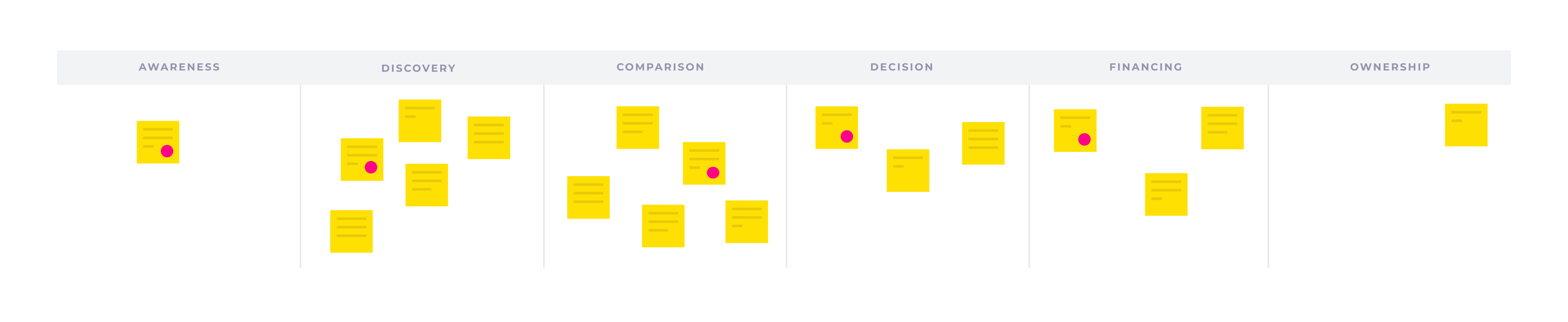
I proposed a project to run user journey workshops with product teams who were hoping to get a better understanding of their products and interfaces. Delving into facilitation work had been a goal of mine and it felt like the perfect opportunity. It also expanded into other workshops during my tenure.
- Although I had extensive experience interviewing users, doing heuristic analyses, and with general UX research and discovery, I hadn't done a ton of journey mapping. I was able to take a class in journey mapping with NN / Group which helped me understand the process more deeply and gave me a path forward.
- I developed all of the artifacts I would need in order to run the workshops successfully: A FigJam template for the workshop, a kickoff document, a workshop pre-read specific to each journey, and templates for the user journey artifacts.
- I created a presentation deck to set expectations and get buy-in from teams and started reaching out to PMs.
- Everyone I spoke with showed enthusiasm and seemed on board but it was more work than I expected to get teams to commit to a workshop. Beyond the commitment itself, scheduling a workshop for six or more people was difficult.
- My original workshop format was to go through the flow in real time with participants which meant workshops had to be long enough to accommodate that process.
- I created a survey for workshop participants to measure the success of the workshops and to get feedback around how to make them more effective.
- In addition to feedback from the surveys, I took notes during each workshop - real time observations gave me more nuanced information than I got from the surveys.
- After running the first couple of workshops I took the feedback and recalibrated. I iterated with every workshop, tweaking the process as I went along.
Reflections & Takeaways
Despite the clear value of the workshops, there was still friction in both getting teams to follow through with workshop sign ups and implementing fixes in their features and products to adequately address the issues identified.
Before I left, I created a new framework to address that friction. I decided not to limit the workshops to the teams themselves and instead would send out a Slack message about a specific upcoming workshop and invite anyone interested to join. This solved for less friction getting participation and would help get fresh eyes on features and products that had been worked on by the same team for long periods of time. I also included accountability check-ins to make sure that insights didn’t go to Confluence to die. While the insight/fix feedback loop was an issue at the organizational level, I did my best to implement a fix it at the project level.
Other Workshops
In addition to running user journey workshops, I created a design thinking workshop deck with the intention of spinning up a new set of workshops. Separately one of the researchers on our team brought up the same idea. I gladly shared my deck and we ended up collaborating and co-facilitating the first design thinking workshop together. We received positive feedback and gathered valuable insights for the team we engaged for the workshop. We also co-facilitated a two day, thirty person agile inception workshop where we ran exercises to identify pain points and identify solutions among other activities. During the solutions ideation, when participants mapped solutions to journey phases, it became clear which areas of the journey needed more focus. After the workshop, we distilled the learnings and shared them with the team.
The Problem
Without clearly identified user segments, teams across the product org were designing and building without specific users in mind. On a couple of occasions the marketing team had outsourced the creation of personas. The resulting artifacts were largely unused because they were difficult to digest and it wasn't clear how to make product decisions based on the data presented (much of which was demographic). Although we had access to a trove of behavioral user data we leveraged for our customers, we weren't using it to inform our product decisions for our consumers. I discovered there were projects by different individuals in different phases attempting to do the same work.
My Approach
I proposed a project to define a new set of user segments specifically for the product team based on behavioral data that would help inform better user-centered decisions. I communicated with stakeholders including those who had started looking into segmentation. I teamed up with a product manager for the data science team and began meeting weekly to try to figure out how we might go about defining these new segments.
- We talked through how many archetypes we might need and what we would need to better understand in order to define them.
- I created and distributed a survey to collect data around what user details would best inform product decisions.
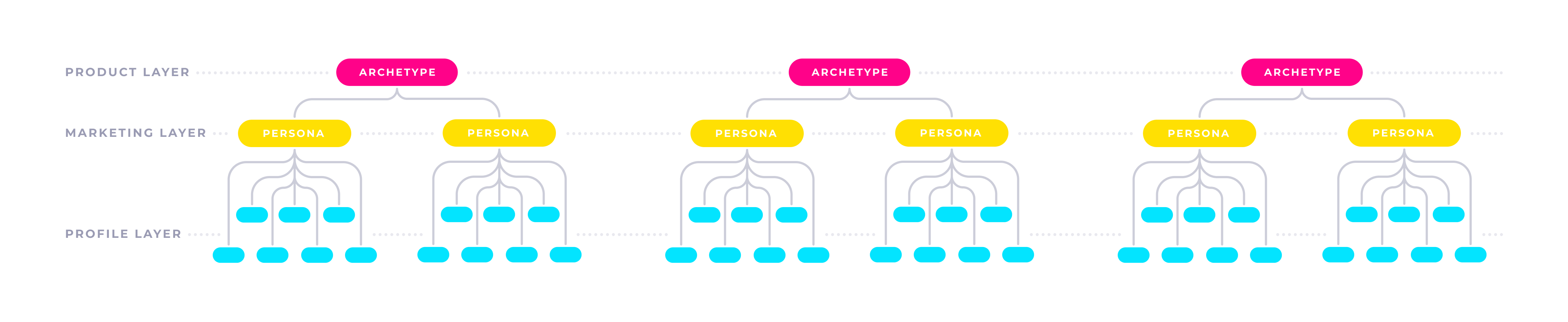
- We looked at the older segments created by the marketing team and used AI to gather and analyze broad shopper data and came up with a set of three archetypes knowing that the product team would be better served with target cohorts than individual demographic profiles.
- Once we had version one of our potential archetypes, I designed an interview to validate our findings, I interviewed twenty-four participants and used AI to analyze the interview transcripts.
- The interviews validated the archetypes we came up with but also showed that the model was more nuanced: Shoppers showed a strong primary archetype but most exhibited traits of a secondary archetype.
- At that point we convened a larger group of cross functional stakeholders including participants from data science and marketing to ensure that everyone was on the same page.
- The researchers on the marketing team used behavioral user profiles from our own analytics to further validate the archetypes we had come up with and the data aligned well.
- After thinking through our internal use cases for these segments and understanding that the marketing team may need more demographic data than the product team, I proposed creating a separate set of marketing personas that would map to each product archetype - all of which would be defined by our user data.
Reflections & Takeaways
Identifying overlapping work and including respective stakeholders in new conversations is essential but it comes with friction. Everyone eventually got on the same page and appreciated the shared time and space to come together to solve our segmentation problem collectively but the work felt laborious: It required deep discovery just to determine who was working on what, diligent scanning of conversations and artifacts on a variety of tools to ensure nothing was missed, and a proactive effort to make sure that stakeholders were in agreement about the collaborative path forward. In the future, I’d like to explore ways to automate some of the work I did, as well as set clearer expectations and make sure I’m creating a crystal clear, shared understanding of the work at hand.
The Problem
Despite having an expansive system, many products and features, and multiple target audiences, there was no visibility into how everything fit together. Over the years there were leadership shifts, shuffling teams, acquisitions, and a variety of organizational changes that created an additional layer of opacity. Without a bird's eye view, teams continued to focus on features at the expense of the system. It was hard for new employees to get a full picture of how the puzzle fit together.
My Approach
In my own investigation to understand our products, I discovered that we had no documentation that illustrated how the system worked or how products and features fit together. I proposed a project to explore ways that we might visualize our platform so that the people working on it could not only understand the system better, but also understand the context and how it fit into the larger product system.
- My original idea was to create an multi-tiered, interactive, isometric map that was illustrative in nature. I had seen some really effective visualizations online that inspired me. I created a very simple prototype of this model and shared it with stakeholders.
- This project was tied to the user journey workshops I had been running. The idea was to have the journey maps I created from the workshops overlay the experience map when a user clicked the part of the map that the journey referred to.
- One of the designers on the team explored a few illustrative approaches to visualizing the map based on my original idea. We found that the idea was sound and the illustrations were effective but ultimately we didn’t have the resources to go that route.
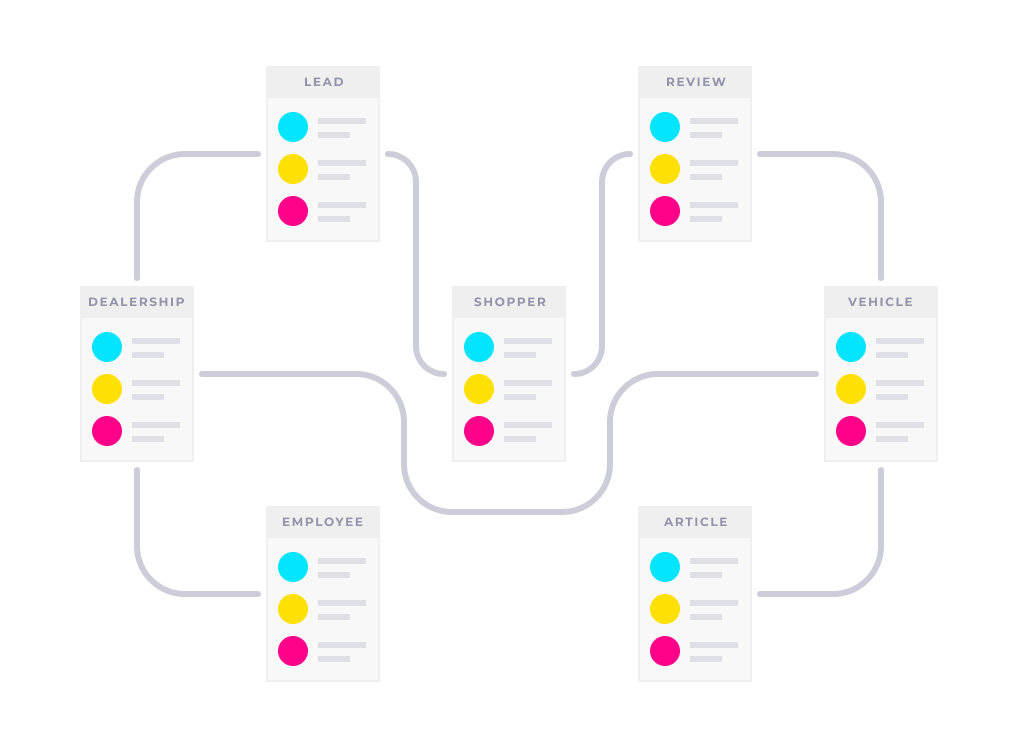
- When I realized I needed to scale back and pivot on the visualization, I went back to the drawing board and explored a few other approaches:
Subway Style
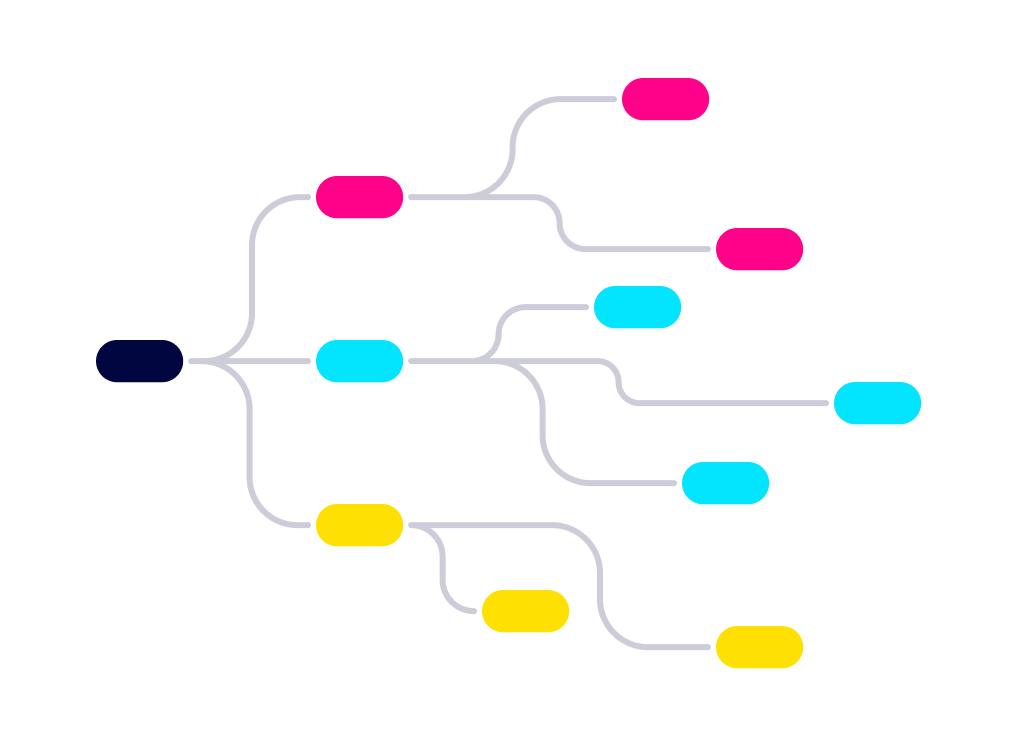
By Object
By Architecture
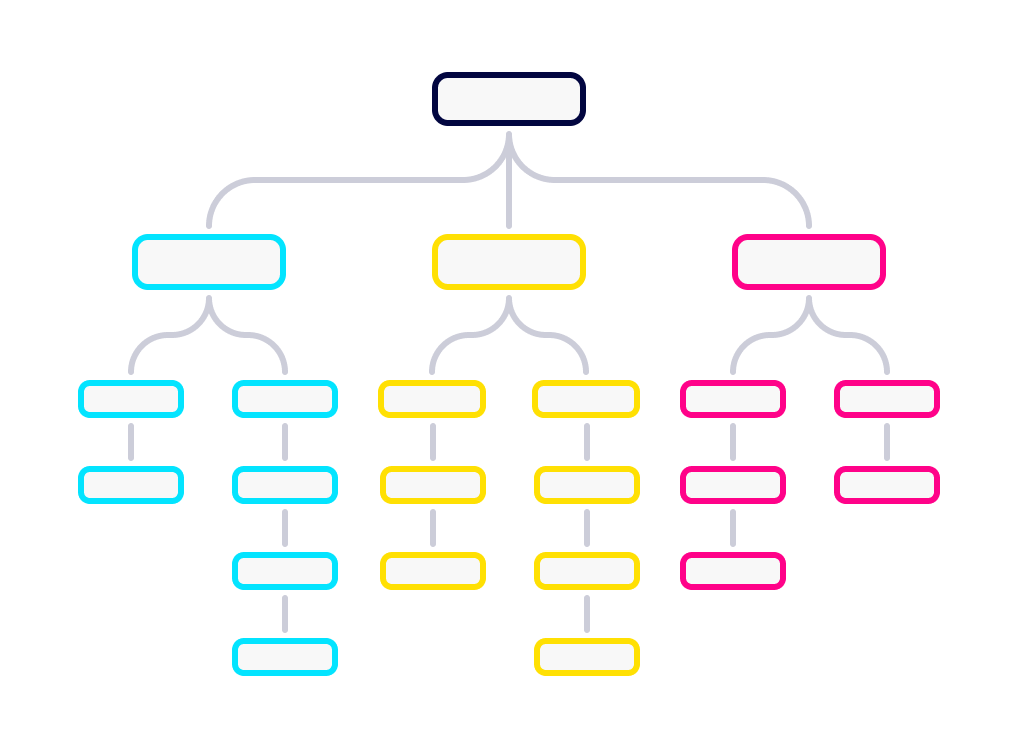
- I ended up creating a subway-style map where each stop was an action (e.g. “submit a lead”) so that the map wasn’t tied to the site map itself. I used a backdrop of phases to provide additional context.
Reflections & Takeaways
This was a project where I bit off more than I could chew. There were constraints with tools, resources, and my own bandwidth but my enthusiasm about the concept and the potential benefit got the best of me. This project pushed me to evolve as a designer and a project leader:
- I need to get specific earlier in the process - high level concepts get buy-in early but aren’t effective if detailed implementation isn’t doable.
- I’ve become more adept at calculating effort and/or tailoring the work to available resources (my own bandwidth included) by scaling back and cutting nice-to-haves.
- Creativity and business may always be at odds with one another but I seek to do my best work threading that needle.
Ultimately I left before I could see the project through. Although I doubt anyone will pick up where I left off, I hope someone does because context and behavioral architecture provide useful insights for designers.